How to choose the right food packaging
(and why so many brands get it wrong first time round)
Most people don't give packaging a second thought until they have to. You've sorted the product, found a supplier, run the numbers, and then someone asks the question you've quietly been avoiding: what are we actually putting it in?
We get that call a lot. We've been doing this for over a decade, and in that time we've had this exact conversation with hundreds of founders, usually a bit frazzled, with a first batch of coffee or supplements or dried fruit landing next week and no real idea what packaging they need. This is for them, and for anyone trying to work it out without vanishing into a pile of technical datasheets for a week.
Start with the job, not the price
Price matters, obviously. But it's the wrong thing to look at first. Packaging has a job to do before anything else: protect what's inside, keep it fresh, and get it from A to B in one piece. Get that wrong and the price was never really the point.
So before you think about cost, three questions worth sitting with:
What does the product actually need? Some things are fussy: moisture, light, strong smells that drift into whatever's next to them on the shelf. Other products are stable and mostly just need to look good. Knowing which one you've got changes everything.
How long does it need to last? Something with a six-month shelf life needs a very different barrier to something you're selling within a fortnight.
Where's it going? A shop shelf, straight to customers through the post, or both? Retail packaging gets handled and re-handled. E-commerce packaging has to survive a courier van. They're not the same problem.
Answer those honestly and you've already ruled out half the options.
The materials, in plain English
Kraft paper
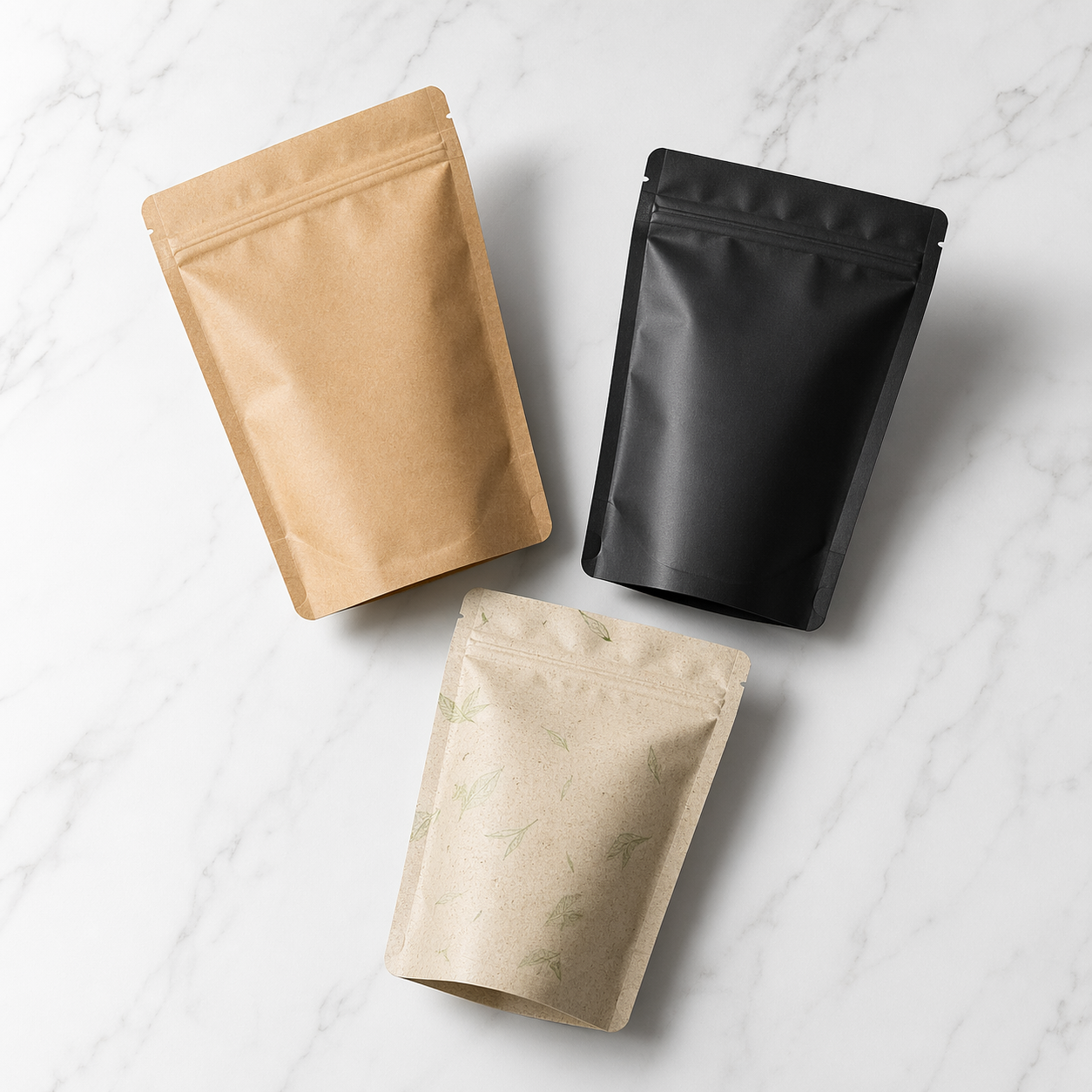
Natural brown paper with a food-safe lining inside. A brilliant barrier for dry goods: herbs, tea, coffee, nuts, snacks. It has that natural, handmade look that does a lot of quiet work for organic and artisan brands, and customers respond to it.
Where it struggles is anything oily, or anything that needs a really tough moisture barrier. And it's not see-through, so unless you add a window your customer is going on trust. For the right product, though, it's genuinely hard to beat.
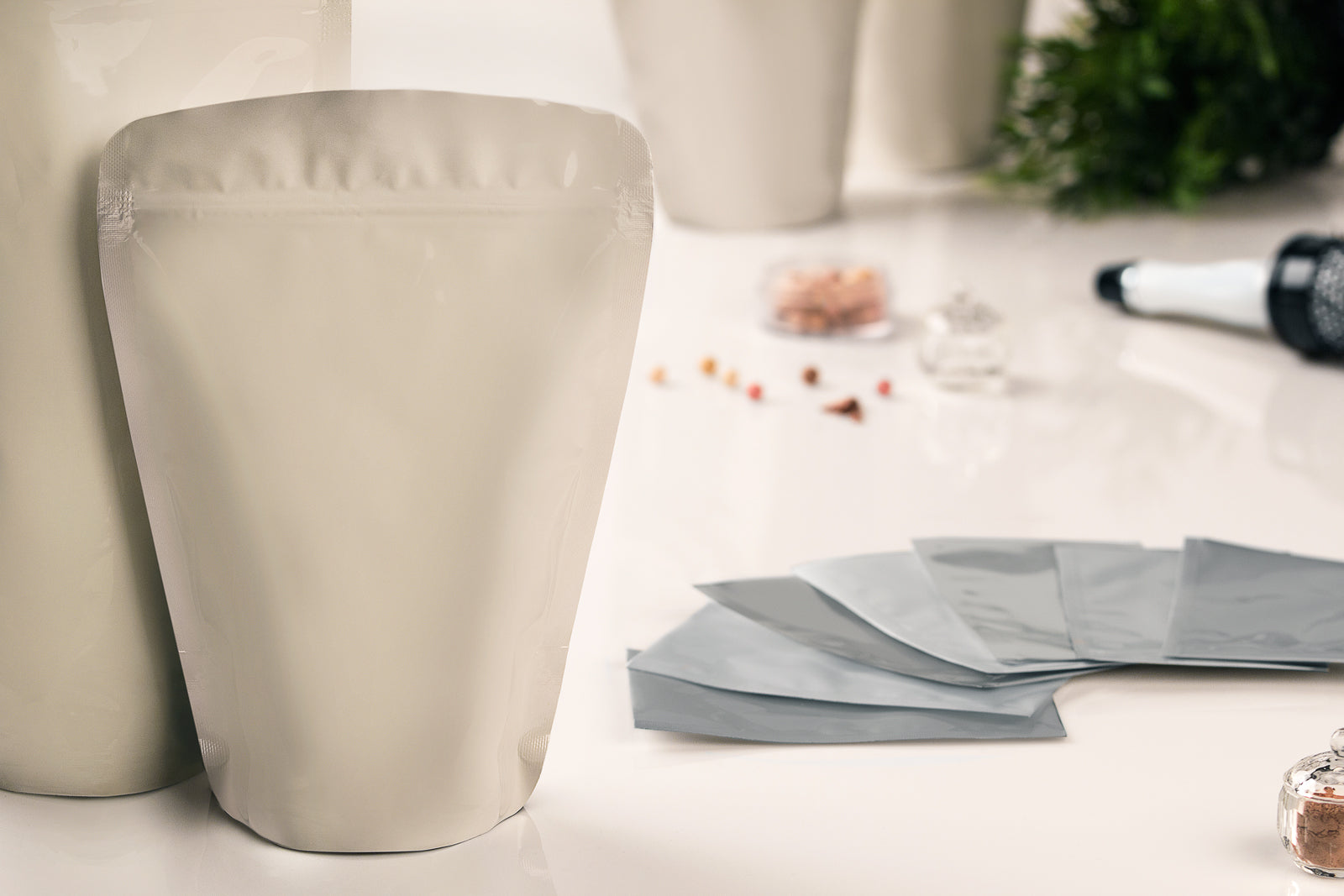
Aluminium / foil
The heavy-duty option. Blocks oxygen, moisture and light, the lot. This is what coffee needs to stay fresh for months, what supplements with strict shelf-life rules need, and what anything that oxidises the moment air reaches it needs.
It looks the part, too. Matte black foil especially has become shorthand for "this is a premium product" before anyone's even opened it. It costs a little more and you can't see through it, but when freshness is the whole pitch, that's a fair trade.
Biodegradable / compostable
Made from kraft, cellulose and starch film, and they break down under composting conditions. Ours came back at 66 days in lab testing. If sustainability is part of your story, these are worth a proper look. The barrier isn't quite foil-level, but for plenty of dry products it does the job nicely, and the right customers absolutely notice.
Recyclable
Not the same thing as biodegradable. These go in the recycling rather than the compost heap, built from mono-material structures that standard recycling streams can actually process. A sensible middle ground if you want the eco credentials without relying on composting facilities.
Shape and size
Stand-up pouches (doypacks, if you want the proper name) are the all-rounder. They sit upright on a shelf, they're easy to live with, and they come in just about every size going. Not sure where to begin? Begin here.
Flat pouches and sachets suit single servings and samples, with a much lower cost per unit. Good for gifts, trial sizes, anything where one pouch is one use.
Side gusset bags handle bigger volumes well: coffee, bulk dry goods, pet food. They open out as you fill them and sit on a solid base.
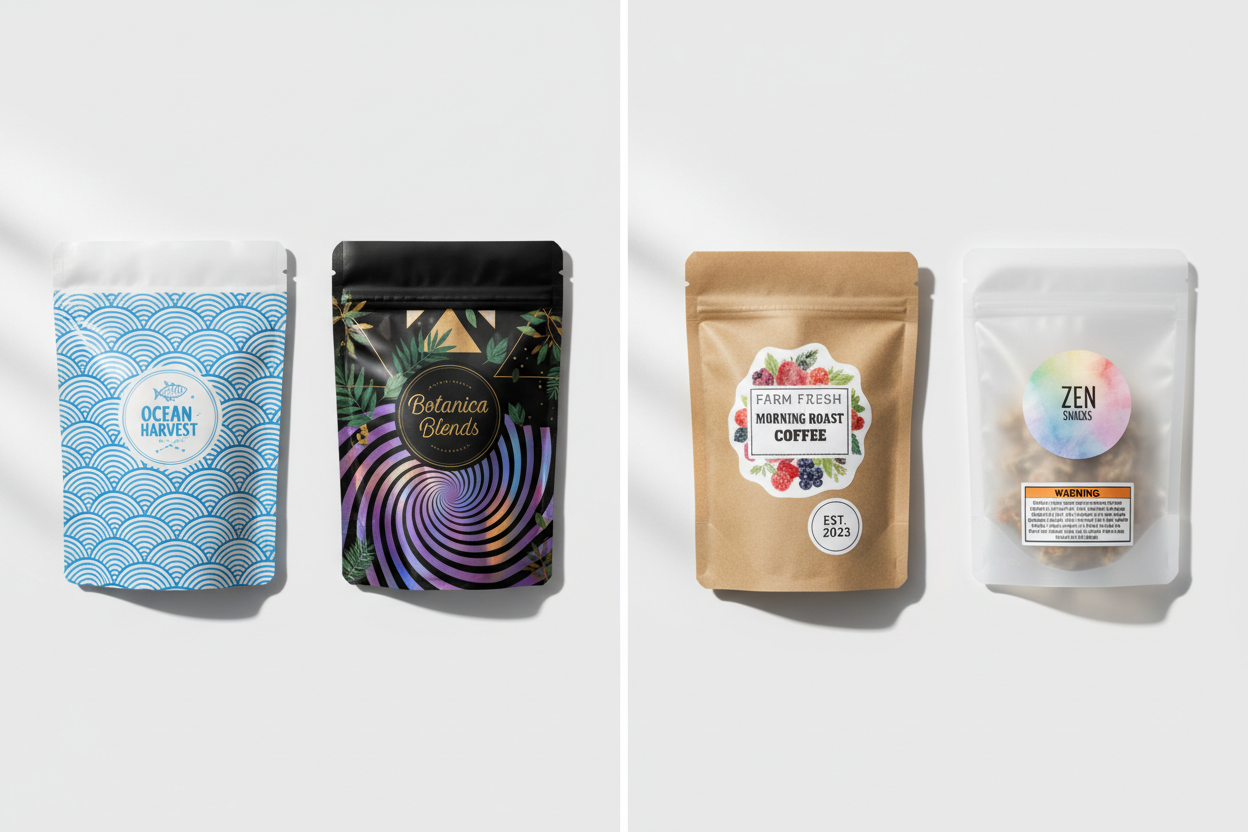
Then there are the small features that quietly make a product feel better made: a zip so people can reseal it, a tear notch so it opens cleanly, a window if you want them to see what they're getting, and a hang hole if you're heading into retail.
Sort the branding earlier than you think you need to
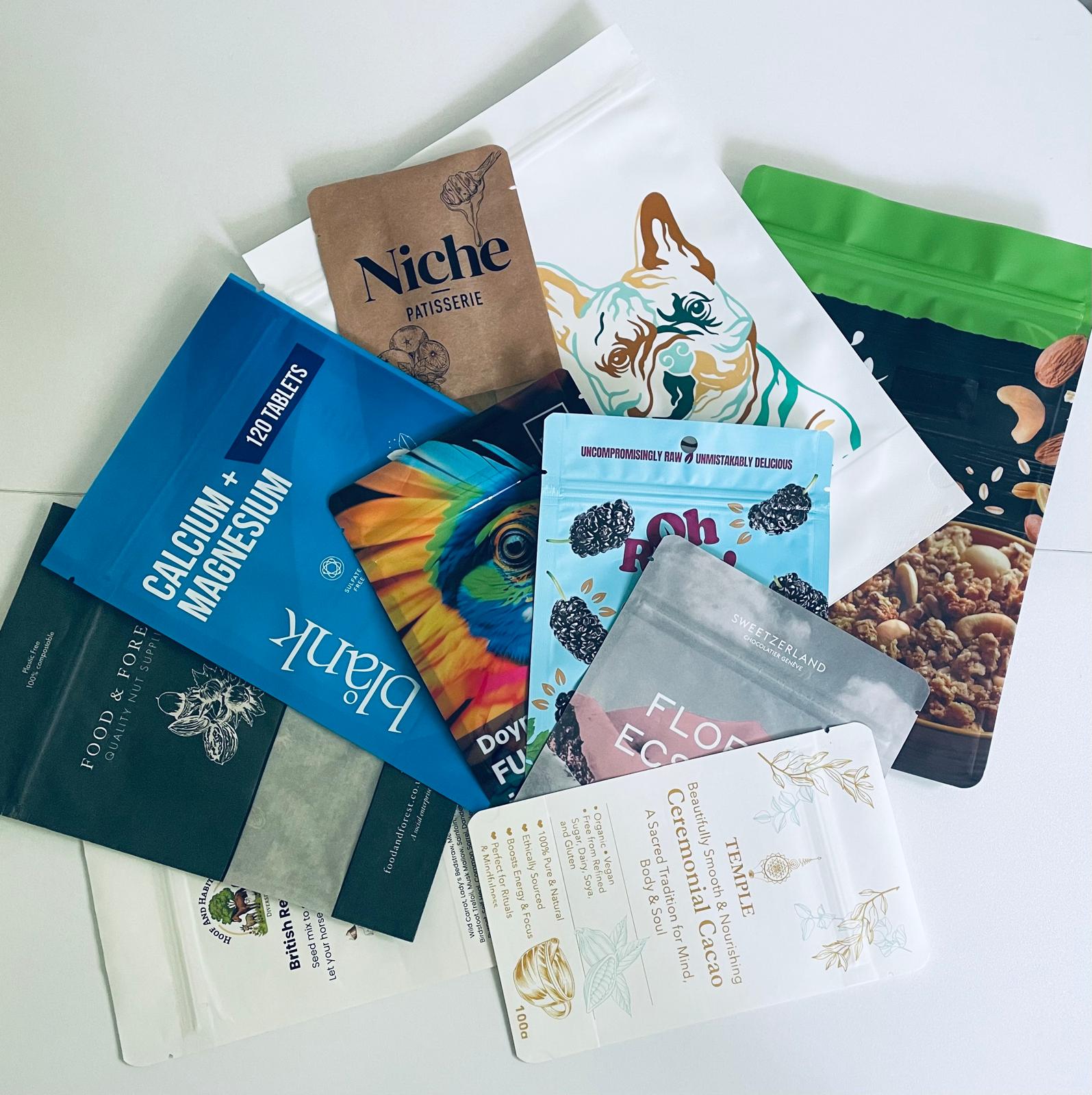
Here's a mistake we see often. A brand orders 500 plain pouches, starts selling, it goes fine, and then they decide they want printed packaging after all. Now there are 400 plain pouches gathering dust in a cupboard.
If there's any chance you'll want custom print down the line (and we'd gently nudge you towards it, even in small runs), it pays to plan for it from the start. Our minimum for printed pouches is 100 units, turned around in roughly a week. It's less fiddly and less expensive than most people assume. And the difference it makes on a shelf, in a product photo, or in an unboxing video is exactly the kind of thing that moves sales.
Order samples before you commit. Every time.
Our samples are free, and that's not a sales trick. We'd honestly rather you test the pouch with your own product before placing an order. Fill it, seal it, stick it in the fridge, open it a week later, and see how it holds up.
That's how you avoid ending up with a thousand pouches in the wrong size. It happens more than you'd think.
None of this is theory for us. Ten years in, we're ISO 9001:2015 certified, we've picked up a few awards along the way (including the Southern Enterprise Awards), and we sit at 4.9 on TrustMate because we'd rather get the small things right than chase the sale. UK delivery is free on orders over £50, too.
If you'd rather just talk it through, we're on 02033719569, info@jamosolutions.co.uk, or WhatsApp. No script, no hard sell, just a hand working out what suits your product.